

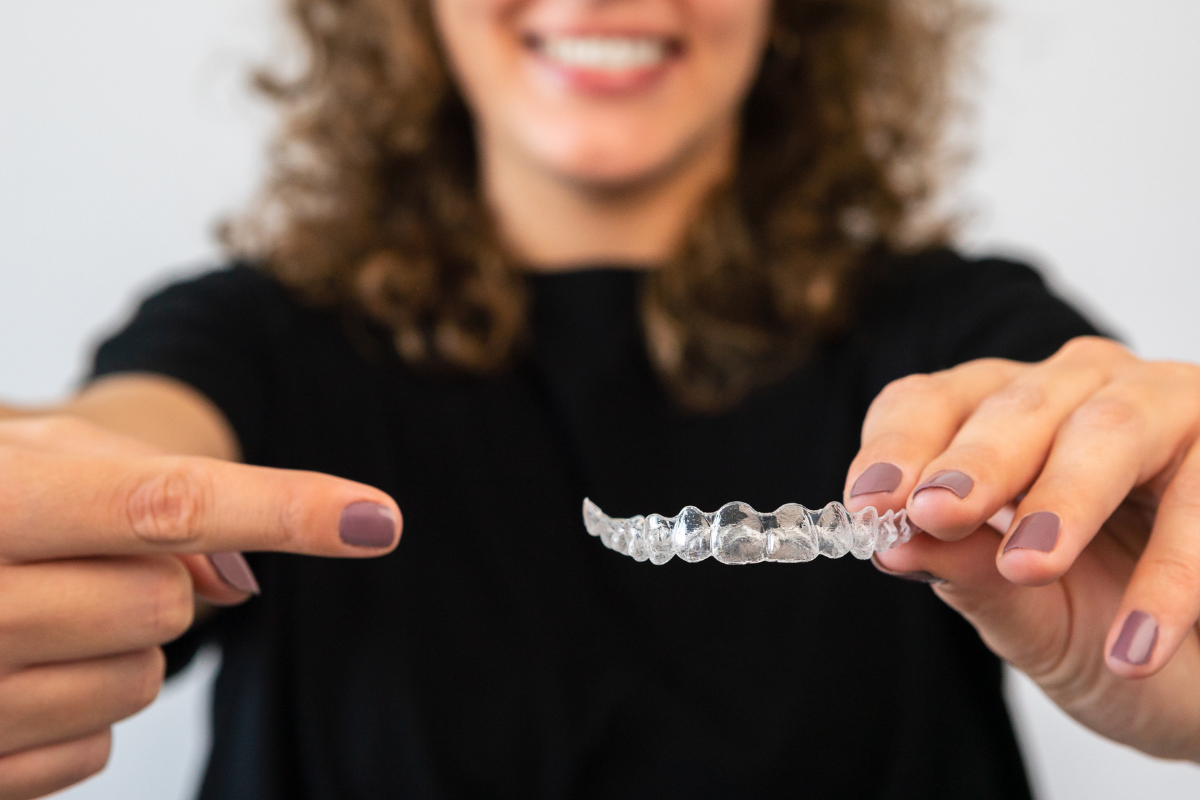
Crowded teeth can make a smile look uneven, but the concern often goes beyond appearance. When teeth overlap or sit too closely together, brushing and flossing can become more difficult, and certain areas may be harder to keep clean. For many people, the idea of straightening crowded teeth also raises another important question: Will I need to have teeth removed to create enough space?
The answer is not always yes. Depending on the amount and type of crowding, the position of your teeth, your bite, and the available space in your dental arches, clear aligner treatment may be able to improve crowding without tooth extraction. A careful evaluation is necessary before deciding which approach is appropriate.
If you are researching clear aligners in Oxford, our team at Oxford Dental can evaluate your teeth and bite, discuss your concerns, and help determine whether clear aligners can meet your smile goals without compromising your oral health.
Why Do Teeth Become Crowded?
Dental crowding occurs when there is not enough available space for teeth to sit comfortably within the dental arch. Instead of lining up evenly, teeth may overlap, rotate, shift behind one another, or become positioned toward the front or back of the arch.
Crowding can develop for several reasons. Genetics can influence the size and shape of your jaw and the amount of space available for your teeth. The size and position of individual teeth can also affect how well they fit together.
Other factors may include:
- Natural changes in tooth position over time
- Early loss or delayed loss of baby teeth
- Teeth that erupt in an unusual position
- Previous orthodontic treatment followed by tooth movement
- Differences between tooth size and available arch space
- Changes in the bite or surrounding structures
Not every crowded smile has the same underlying cause. That is why treatment should begin with an examination rather than assuming that extraction, braces, or clear aligners will automatically be necessary.
Can Clear Aligners Fix Crowded Teeth Without Extraction?
In many cases, clear aligners may be able to improve mild to moderate crowding without removing teeth. The key is whether enough space can be created or redistributed to allow the teeth to move into healthier, more functional positions.
Clear aligners use a series of custom-made trays to apply controlled pressure to the teeth. As treatment progresses, individual teeth can gradually move according to the treatment plan.
For some patients, this can involve creating space by changing the position of teeth within the existing dental arch rather than removing a tooth.
However, there is an important distinction: clear aligners do not guarantee that extraction will never be necessary. Severe crowding or certain complex orthodontic problems may require a different treatment approach.
An experienced dentist or orthodontic provider needs to determine what is realistic for your particular smile.
How Can Space Be Created Without Removing Teeth?
If your teeth are crowded, your dental team may look at several ways to improve the available space before considering extraction.
1. Moving Teeth Into Better Positions
Sometimes teeth are positioned in a way that uses available space inefficiently. Carefully planned tooth movement can redistribute that space and allow crowded teeth to become better aligned.
Clear aligners can be designed to move individual teeth gradually rather than attempting to shift the entire smile at once.
2. Expanding the Dental Arch When Appropriate
In selected cases, treatment may involve widening the dental arch within appropriate anatomical limits. The goal is not simply to make the smile wider. Instead, your provider evaluates whether changes to arch form can provide useful space while maintaining a stable and healthy result.
Whether this approach is appropriate depends on factors such as your age, bone structure, bite, and the severity of your crowding.
3. Creating Small Amounts of Space Between Teeth
Another technique used in some orthodontic treatment plans is interproximal reduction, sometimes called IPR.
This involves carefully removing a very small amount of enamel between selected teeth to create additional space. It is not the same as removing an entire tooth.
IPR is only appropriate when clinically indicated. Your dental provider can determine whether this technique is suitable for your teeth and how much space, if any, should be created.
4. Combining Different Tooth Movements
A treatment plan may use several types of tooth movement together. For example, certain teeth may be moved slightly while others are rotated or repositioned.
The objective is to use the available space efficiently rather than relying on a single movement or procedure.
When Might Extraction Still Be Recommended?
Although avoiding extraction may be possible for many patients, it is not always the healthiest or most predictable choice.
Some patients have significant crowding where there simply is not enough space to align all of the teeth properly. Trying to force every tooth into an available space could create an unstable result or move teeth beyond healthy boundaries.
Extraction may be considered when there is:
- Severe dental crowding
- A significant mismatch between tooth size and available space
- Certain complex bite problems
- Teeth that cannot be properly positioned within the existing dental arch
- A treatment plan where removing a tooth provides a more stable result
The purpose of recommending extraction is not simply to make orthodontic treatment easier. When it is appropriate, creating additional space can help the dental team position the remaining teeth more effectively.
Your provider should explain why extraction is being considered and discuss alternative approaches when appropriate.
Does Avoiding Extraction Always Mean Clear Aligners Are the Better Choice?
Not necessarily.
Clear aligners can be an excellent option for many orthodontic concerns, but treatment should be selected based on your dental needs rather than the desire to avoid a particular appliance or procedure.
For example, some patients may have crowding that responds well to clear aligner treatment, while others may have more complex tooth or jaw relationships that require another orthodontic approach.
Your treatment plan should consider:
Your Overall Bite
Straight-looking front teeth are only part of the picture. Your upper and lower teeth also need to come together appropriately.
A dentist evaluates how your bite functions and whether moving crowded teeth could affect the relationship between your upper and lower arches.
The Severity of Crowding
Mild overlapping may be very different from severe crowding where several teeth are rotated or displaced.
Clear aligners can address many alignment concerns, but the complexity of the movement influences whether they are the appropriate choice.
Your Tooth and Gum Health
Orthodontic treatment generally works best when your teeth and gums are healthy enough to support the planned movement.
If you have untreated cavities, active gum disease, or another dental concern, those issues may need attention before beginning orthodontic treatment.
Your Long-Term Stability
A successful treatment plan is not simply about getting teeth into a straighter position. Your dentist also needs to consider how the result can remain stable after active treatment.
Retention is an important part of maintaining your new alignment.
What Should You Expect During a Clear Aligner Consultation?
If you are considering clear aligners for crowded teeth, the first appointment is an opportunity to determine whether the treatment makes sense for you.
Your dentist may evaluate your:
- Tooth alignment
- Bite
- Gum health
- Existing dental restorations
- Jaw relationship
- Available space
- Overall oral health
Depending on your needs, diagnostic records or digital imaging may also be used to develop a more detailed treatment plan.
At Oxford Dental, we focus on understanding your individual dental needs before recommending treatment. Rather than assuming that every crowded smile should be treated in exactly the same way, we can discuss the available options and explain what may be realistic for your smile.
What Happens If You Are a Candidate for Clear Aligners?
If clear aligners are appropriate, your treatment will be planned around the movements your teeth need to make.
You will typically receive a series of customized aligners. Each stage is designed to gradually move your teeth toward the planned positions.
Because the aligners are removable, they can generally be taken out for meals and routine brushing and flossing. However, consistent wear is important for treatment to progress as planned.
Your dental team will also monitor your progress and determine whether your teeth are tracking appropriately throughout treatment.
The exact treatment length varies considerably from one patient to another. A person with minor crowding may require a different treatment timeline than someone with more significant alignment concerns.
Can Crowded Teeth Affect Oral Health?
Crowding is not exclusively a cosmetic issue.
When teeth overlap, certain surfaces can become harder to reach with a toothbrush or floss. Food particles and plaque may be more difficult to remove from tight or irregular areas.
Improving alignment may make daily oral hygiene easier for some patients. However, straightening your teeth should not replace regular dental care.
Good oral hygiene remains important before, during, and after clear aligner treatment.
At our dental clinic, we look at orthodontic concerns as part of your broader oral health rather than treating tooth alignment as an isolated cosmetic issue.
What If You Have Crowding but Don’t Want Traditional Braces?
This is one reason clear aligners appeal to many adults and teens.
Traditional braces use brackets and wires attached to the teeth. Clear aligners instead use removable trays that are designed to be less noticeable when worn.
For appropriate candidates, aligners can offer several practical advantages:
- A more discreet appearance
- Removability for eating
- Easier access to teeth during brushing and flossing
- No traditional brackets or wires
- A treatment plan customized to the patient’s alignment needs
Still, convenience should not be the only factor when selecting orthodontic treatment. The most appropriate option depends on the movements your teeth require and the condition of your overall oral health.
Questions to Ask Before Starting Clear Aligner Treatment
If you are considering treatment for crowded teeth, don’t hesitate to ask your dentist detailed questions during your consultation.
Some useful questions include:
- Can my crowding potentially be treated without extraction?
- How severe is my crowding?
- What is causing my teeth to overlap?
- Do I need treatment for my bite as well as my tooth alignment?
- Would clear aligners be appropriate for my specific case?
- Could another orthodontic option provide a more predictable result?
- Would I need space created between any teeth?
- What happens if my teeth do not track as expected?
- How will my results be maintained after treatment?
Having these conversations can help you understand your options instead of choosing treatment based solely on appearance.
Why Choose Oxford Dental for Clear Aligner Care?
Choosing a local dental practice for orthodontic treatment means you should feel comfortable asking questions and discussing your concerns openly.
At Oxford Dental, we provide personalized dental care based on each patient’s needs. Our services are designed to support your oral health while helping you work toward the smile you want.
If crowded teeth are affecting your confidence, making oral hygiene difficult, or simply making you consider orthodontic treatment, our team can evaluate your smile and discuss whether clear aligners may be appropriate.
We don’t believe every patient needs the same treatment. Your dental needs, bite, alignment, oral health, and treatment goals all matter when developing a plan.
Frequently Asked Questions
Can clear aligners fix crowded teeth without removing teeth?
In some cases, yes. Mild to moderate crowding may be treated by moving and repositioning teeth, creating limited space when appropriate, or using a combination of planned movements. However, severe crowding may require extraction or another orthodontic approach.
How do I know if I can avoid tooth extraction?
The only reliable way to determine this is through an individual dental and orthodontic evaluation. Your dentist will consider the severity of crowding, available space, tooth position, bite, jaw structure, and overall oral health.
Are clear aligners suitable for severe crowding?
Clear aligners can treat many alignment concerns, but severe or complex crowding may require a different approach. Your dental provider can determine whether aligners can achieve predictable results in your specific situation.
Can clear aligners make enough room for crowded teeth?
They may be able to create or redistribute space through planned tooth movements. In some cases, limited enamel reduction or other techniques may also be considered. The appropriate approach depends on your individual anatomy and treatment needs.
Should I see a dentist about crowded teeth even if they don’t hurt?
Yes. Crowded teeth do not necessarily cause pain, but they can make cleaning more difficult and may affect your bite or tooth positioning. A dental evaluation can help determine whether treatment would be beneficial.
Get Your Crowded Smile Evaluated in Oxford
You do not necessarily have to assume that crowded teeth mean tooth extraction or traditional braces. For some patients, carefully planned clear aligner treatment can improve alignment while working within the natural limitations of the teeth and jaw.
The important first step is finding out what is realistic for your smile.
If you are considering clear aligners in Oxford, Oxford Dental can evaluate your teeth, discuss your concerns, and explain the treatment options available for your situation. Our team provides personalized dental care with an emphasis on healthy, functional, and natural-looking results.
Book Now to schedule a consultation and find out whether clear aligners may be the right approach for your crowded teeth.
Recent Posts
See All