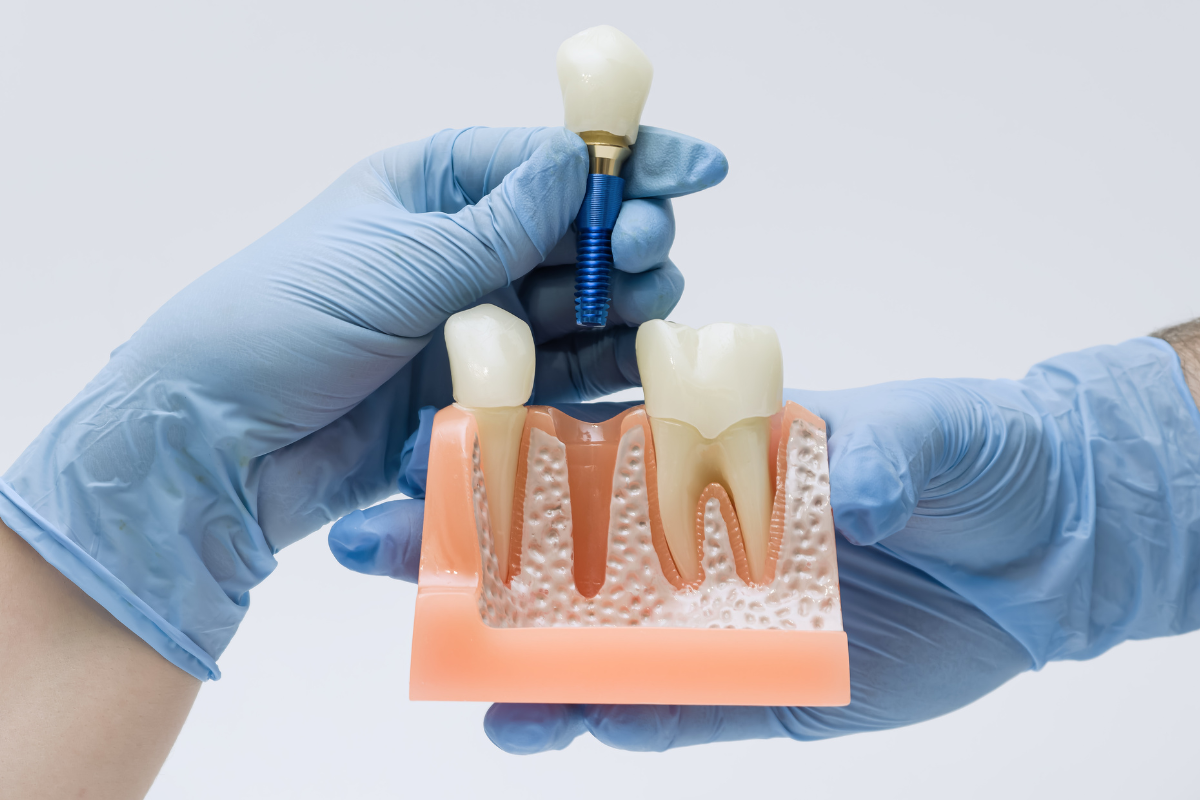
Losing several teeth can raise an important question: does every missing tooth need its own dental implant? Not necessarily. Depending on how many teeth are missing, where the gaps are located, and the condition of your jawbone, a dentist may be able to use a smaller number of implants to support a bridge or another tooth-replacement restoration.
For example, replacing three adjacent missing teeth may not require three separate implants. In some cases, two implants can support a bridge that replaces multiple teeth. Replacing a full arch of teeth involves a different approach, with the number and placement of implants determined by the planned restoration and the patient’s individual needs.
If you’re exploring dental implants in Oxford, understanding how implant-supported restorations work can help you prepare for a consultation and ask more informed questions. At Oxford Dental in Oxford, MS, a personalized evaluation can help determine which tooth-replacement options may be appropriate for your oral health, bite, and long-term goals.
There isn’t one implant count that works for everyone. The best plan balances stability, function, appearance, and the preservation of healthy oral structures.
What Determines How Many Dental Implants You Need?
The number of implants depends on more than the number of missing teeth. Your dentist considers the location of the gaps, the type of restoration being planned, the health of your gums, the amount of supporting jawbone, and how your bite distributes pressure when you chew.
Several factors influence the treatment plan.
1. How many teeth are missing and where they are located
Replacing two or three neighboring teeth is different from replacing several teeth scattered throughout the mouth. When teeth are missing next to one another, an implant-supported bridge may be an option. When the gaps are separated, the dentist may need to plan for different restorations in different areas.
The front of the mouth also has different aesthetic considerations from the back. Front-tooth replacement may require particular attention to tooth shape, color, gum contours, and the appearance of the smile.
2. The type of restoration being used
Dental implants act as artificial tooth roots. They can support individual crowns, bridges, or full-arch restorations.
- Individual implant crowns: Each implant supports a separate replacement tooth.
- Implant-supported bridges: Two or more implants support a restoration that replaces several adjacent teeth.
- Full-arch implant restorations: A planned number of implants supports a larger restoration replacing most or all teeth in an upper or lower arch.
These options differ in design and suitability. Your dentist will consider which type of restoration can provide appropriate support for your situation.
3. Your jawbone and gum health
Implants need adequate supporting bone and healthy surrounding tissues. If you’ve been missing teeth for a long time, some bone loss may have occurred in the area. Gum disease can also affect treatment planning.
Your dentist may recommend addressing gum disease before implant placement or evaluating whether additional procedures are needed to support the restoration. Bone grafting may be considered in selected cases, but not everyone needs it.
4. Your bite and chewing forces
The way your upper and lower teeth meet affects how pressure is distributed across an implant-supported restoration. Clenching, grinding, and certain bite patterns may influence implant positioning and the design of the final teeth.
The goal is not simply to use the fewest implants possible. It’s to develop a plan that provides appropriate support and works with your oral anatomy.
How Many Implants Are Needed for Different Situations?
The examples below illustrate common treatment approaches. They are not fixed rules or a substitute for an individual examination.
| Tooth-replacement situation | Possible approach |
| One missing tooth | One implant supporting a crown may be appropriate |
| Two adjacent missing teeth | One or two implants may be considered, depending on the restoration and clinical circumstances |
| Three adjacent missing teeth | An implant-supported bridge may use two or more implants |
| Several missing teeth in separate areas | Individual implants or a combination of implants and bridges may be considered |
| Most or all teeth missing in one arch | A full-arch restoration supported by a planned number of implants may be an option |
The final implant count depends on the patient’s anatomy, the location and span of the missing teeth, the restoration’s design, and the dentist’s clinical assessment.
Replacing three adjacent teeth
Imagine you’ve lost three neighboring teeth. One option might be to place three separate implants, each supporting an individual crown. Another possibility may be an implant-supported bridge, in which a smaller number of implants supports a restoration replacing all three teeth.
Whether a bridge is appropriate depends on the available bone, the length of the gap, the bite, and the way the restoration can be supported. A dentist should evaluate these factors before recommending a design.
Replacing several teeth that are not next to each other
If you have gaps in different parts of your mouth, a single bridge may not be able to replace all the missing teeth. Your treatment plan may involve separate implants, multiple bridges, or a combination of restorative approaches.
The aim is to restore function and appearance while accounting for the individual needs of each area.
Replacing most or all teeth in one arch
People missing most or all of their upper or lower teeth may be candidates for a full-arch implant-supported restoration. These treatments use a planned number of implants to support a larger set of replacement teeth.
The number of implants required varies with the design, bone availability, bite, and other clinical considerations. A full-arch restoration should be planned carefully rather than selected based on a standard implant count advertised for every patient.
Is It Better to Have One Implant for Every Missing Tooth?
Not necessarily. An individual implant for each missing tooth is one approach, but it is not always required or appropriate.
An implant-supported bridge can replace multiple adjacent teeth without placing a separate implant beneath every replacement tooth. This can reduce the number of implants needed in selected cases, but it does not automatically make the bridge the better option.
Your dentist may compare the options based on:
- Support and stability: Whether the planned implants can adequately support the restoration.
- Bone availability: Whether the available jawbone can accommodate the proposed implant positions.
- Cleaning and maintenance: How easily you can clean around the restoration and underneath a bridge.
- Appearance: How the replacement teeth will fit your smile and gum contours.
- Long-term planning: How the restoration may be maintained or repaired over time.
Each option has advantages and limitations. The appropriate choice is the one that fits your clinical needs, not necessarily the one with the highest or lowest implant count.
What If You Have Bone Loss or Gum Disease?
Bone loss and gum disease do not automatically mean dental implants are impossible, but they can change the treatment plan.
When there isn’t enough supporting bone
After a tooth is lost, the jawbone in that area can gradually change. If there is insufficient bone for the planned implant, a dentist may discuss bone grafting or another approach. Whether grafting is needed depends on the location and extent of bone loss and the proposed restoration.
When gum disease is present
Active periodontal disease generally needs to be managed before implant treatment proceeds. Healthy gums and good plaque control are important because inflammation around implants can damage the supporting tissues.
Your dentist may assess your periodontal health and recommend treatment or maintenance before determining whether implants are suitable.
When additional medical considerations apply
Medical history, smoking, diabetes management, certain medications, and previous dental procedures may influence healing or treatment planning. Be sure to tell your dental team about your health conditions and medications.
A thorough assessment helps your dentist identify relevant risks and explain what steps may be appropriate before implant placement.
What Happens During Dental Implant Planning?
Determining the right number of implants begins with a comprehensive evaluation rather than a predetermined formula.
The process may include:
- Reviewing your goals and dental history. Your dentist discusses which teeth are missing, your priorities, and any relevant medical or dental concerns.
- Examining your mouth. The dentist assesses your gums, remaining teeth, bite, and the spaces where teeth need to be replaced.
- Evaluating bone and anatomy. Dental imaging, including three-dimensional imaging when indicated, may help assess the available bone and nearby structures.
- Comparing restoration options. The dentist explains whether individual crowns, an implant-supported bridge, a full-arch restoration, or another option may be appropriate.
- Planning maintenance and follow-up. The treatment plan should include how to care for the restoration and how its condition will be monitored.
The number of implants should follow the restoration plan and clinical findings—not the other way around.
How Do You Care for Implant-Supported Teeth?
Dental implants require ongoing care even though the replacement teeth themselves cannot develop cavities. Plaque can still accumulate around the implant and affect the surrounding gums and bone.
To help maintain your restoration:
- Brush twice daily with a soft-bristled toothbrush.
- Clean between your teeth and around the implants every day using tools recommended by your dental team.
- Follow your schedule for professional examinations and cleanings.
- Avoid using your teeth to bite hard objects or open packaging.
- Tell your dentist if you notice bleeding, swelling, persistent discomfort, changes in your bite, or movement in the restoration.
For implant-supported bridges, your dentist or hygienist can demonstrate how to clean underneath the replacement teeth. The appropriate technique depends on the type of restoration.
Frequently Asked Questions
Do three missing teeth always require three dental implants?
No. In selected cases, an implant-supported bridge can replace three adjacent teeth using fewer implants than individual implant crowns would require. The appropriate number depends on bone support, the restoration design, and your bite.
Can two dental implants support four replacement teeth?
In some situations, two implants can support a bridge replacing four teeth. However, this is not appropriate for every patient or every gap. Your dentist must assess the span, implant positions, bone support, and chewing forces before determining whether that design is suitable.
Can I get dental implants if I’ve been missing teeth for years?
Possibly. Long-standing tooth loss can lead to changes in the jawbone, but it does not automatically rule out implant treatment. Your dentist can assess the available bone and discuss whether grafting or another treatment approach may be needed.
Is an implant-supported bridge better than individual implants?
Neither option is universally better. An implant-supported bridge may replace several adjacent teeth with fewer implants, while individual implants can support separate crowns. Your dentist can explain which approach best fits your anatomy, oral health, and maintenance needs.
How do I find out how many implants I need?
A dental consultation is the best starting point. Your dentist will examine your mouth, assess the missing-tooth areas, review your health history, and use appropriate imaging to develop a treatment plan.
Explore Dental Implant Options at Oxford Dental
Replacing several missing teeth does not always require one implant for every tooth. Depending on your oral health and the restoration being planned, an implant-supported bridge or another solution may help restore your smile and chewing function.
At Oxford Dental in Oxford, MS, our team can evaluate your missing teeth, discuss suitable restorative options, and explain the factors that determine how many implants may be needed. We provide guidance tailored to your dental health and goals, so you can make an informed decision about treatment.
If you’re considering dental implants in Oxford, contact Oxford Dental to schedule a consultation and discuss your tooth-replacement options.
Recent Posts
See All