

Having a tooth extracted can bring a sense of relief, especially if the tooth was painful, badly damaged, infected, or no longer able to function properly. But once the tooth is gone, an important question remains: What should replace it?
Leaving a space may seem harmless, particularly if the missing tooth is toward the back of your mouth. However, a missing tooth can affect chewing, the position of surrounding teeth, and the underlying jawbone over time. Replacing it may help restore both function and confidence.
If you are considering dental implants Oxford patients can turn to for a long-term tooth replacement option, the next step is understanding what happens after extraction and whether an implant is appropriate for your situation. At Oxford Dental, we provide personalized dental implant treatment planning based on your oral health, bone support, gum health, and individual smile goals.
Can You Get a Dental Implant After a Tooth Extraction?
Yes, a dental implant can often be used to replace a tooth after extraction. In fact, extraction and tooth replacement are frequently part of the same overall treatment plan.
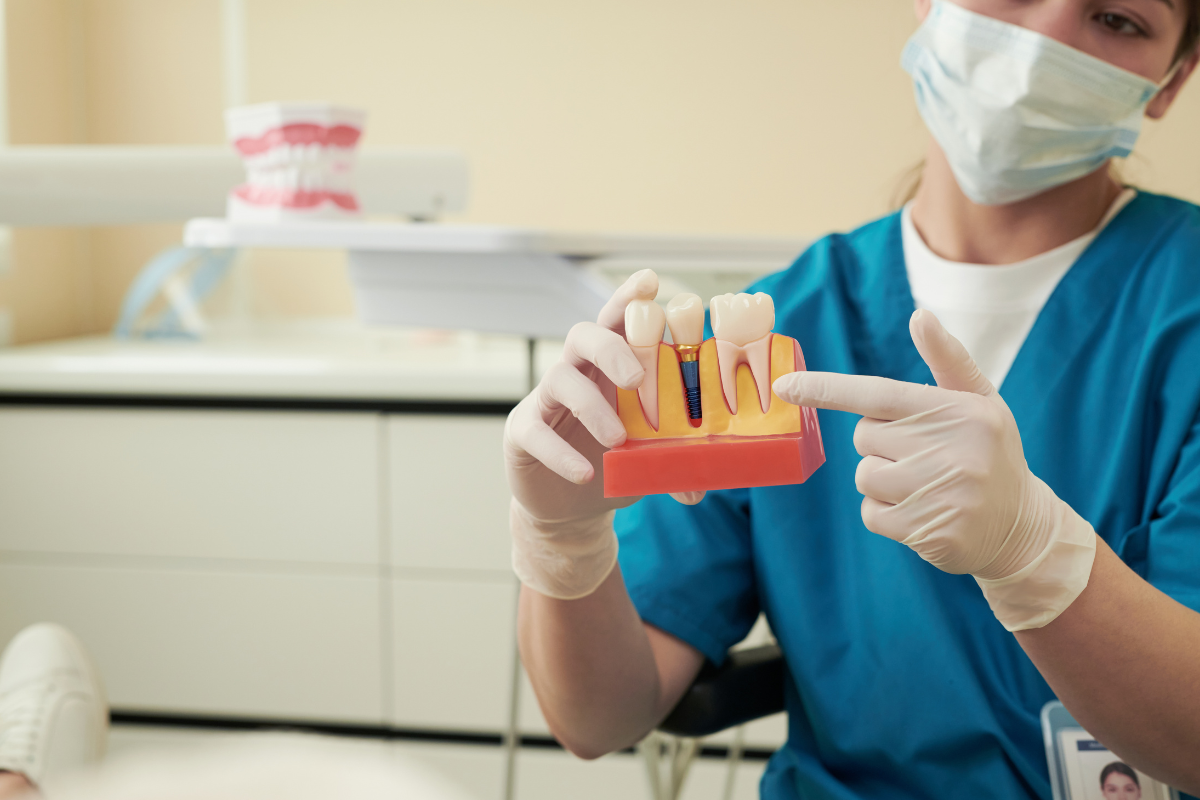
A dental implant is designed to replace the root portion of a missing tooth. After the implant integrates with the jawbone, it can support a custom restoration such as a dental crown.
However, an implant is not automatically placed immediately after every extraction. Your dentist first needs to determine whether the extraction site and surrounding tissues provide a suitable foundation.
Your treatment may depend on factors such as:
- The condition of the jawbone
- The health of your gums
- Why the tooth was extracted
- Whether an infection was present
- The location of the missing tooth
- The condition of nearby teeth
- Your overall oral health
- Whether bone grafting or other preparation is needed
This is why an evaluation with a dentist is an important step before deciding when or how an implant should be placed.
What Happens Immediately After a Tooth Extraction?
After an extraction, your mouth needs time to heal. The extraction leaves an open socket where the tooth was previously located, and the surrounding gum and bone begin the natural healing process.
Your oral care provider will give you instructions for protecting the area during recovery. Depending on your individual situation, you may need to avoid certain foods, keep the area clean according to your dentist’s instructions, and allow the extraction site to heal properly.
The healing period is particularly important when you are considering a future implant.
At Oxford Dental, we focus on evaluating your oral health and planning the next stage of treatment rather than simply treating the extraction as an isolated procedure. Our services can help you understand your replacement options and determine the most appropriate approach for your smile.
Does Every Extraction Need to Be Followed by an Implant?
No. A dental implant is one tooth replacement option, but it is not necessarily the right choice for everyone.
Depending on your needs, alternatives may include a dental bridge or removable partial denture. Your dentist can explain the advantages and limitations of each option.
An implant may be considered when you want a fixed replacement that replaces the missing tooth without relying on neighboring teeth for support. The right choice depends on your oral health, treatment goals, and clinical evaluation.
The important point is not to assume that an extraction automatically means you need an implant, or that you should simply leave the space untreated.
A conversation with a local dental practice can help you understand what makes sense for your particular situation.
What Does Your Dentist Check Before an Implant?
Before recommending dental implant treatment, your dentist needs to examine the area where the tooth was removed.
1. Jawbone Support
Dental implants depend on adequate bone support. Because the implant is placed into the jawbone, your dentist needs to evaluate the amount and condition of bone available at the extraction site.
If there has been bone loss, additional treatment may be recommended before implant placement.
2. Gum Health
Healthy gums provide an important foundation for successful tooth replacement. If you have active gum disease or another oral health concern, your dentist may recommend treating that issue before moving forward.
Taking care of your gums first can help create a healthier environment for future restorative treatment.
3. Healing of the Extraction Site
Some patients may be candidates for an implant soon after extraction, while others may need additional healing time.
The timing depends on the condition of the extraction site and your individual treatment plan. Your dentist will determine when the area is ready based on your clinical needs.
4. The Condition of Nearby Teeth
Your dentist may also examine the teeth surrounding the missing tooth.
Neighboring teeth can affect the available space and the way your upper and lower teeth come together. Evaluating these factors helps your dental clinic develop a restoration that fits comfortably within your existing bite.
What If You Have an Infection?
If the tooth was removed because of severe decay, an abscess, or another infection, your dentist will want to make sure the area is appropriately managed before implant placement.
This does not automatically mean that you cannot receive an implant.
Instead, the timing and treatment plan may need to be adjusted. Your dentist may recommend allowing the area to heal and ensuring that the infection has been addressed before proceeding.
This is one reason why personalized treatment planning matters. Two people may have the same type of extracted tooth but require different approaches before receiving an implant.
What If You Don’t Have Enough Bone for an Implant?
Bone loss does not necessarily mean dental implants are no longer an option.
When there is not enough bone to provide the desired support, your dentist may discuss bone grafting or another preparatory procedure. The purpose is to improve the foundation available for implant treatment.
Whether this is necessary depends on the location of the missing tooth and the amount of bone available.
Oxford Dental’s existing implant treatment approach includes evaluating the jawbone and considering preparatory treatments such as bone grafting when additional support is needed.
The key is to evaluate the area rather than assume that bone loss automatically rules out implant treatment.
How Long After an Extraction Can You Get a Dental Implant?
There is no single timeline that applies to every patient.
Some implants may be placed relatively soon after an extraction when the clinical conditions are appropriate. In other cases, your dentist may recommend allowing the extraction site to heal before placing the implant.
Additional procedures, such as bone grafting, can also affect the overall treatment timeline.
Your dentist may consider:
- How the extraction site is healing
- Whether infection was present
- The amount of available bone
- Gum health
- The location of the missing tooth
- Whether additional procedures are necessary
- Your individual healing response
This personalized approach helps your dental provider determine when the implant can be placed safely and predictably.
What Happens Once You’re Ready for the Implant?
Once your mouth has healed and your dentist determines that you are ready, the implant can be placed into the jawbone.
The implant acts as an artificial tooth root. Over time, the surrounding bone can integrate with the implant, creating a stable foundation for the final restoration.
The overall process generally involves several stages:
- Evaluation and treatment planning – Your dentist assesses the extraction site, gums, bone, bite, and surrounding teeth.
- Preparation, if needed – Additional procedures such as bone grafting or gum treatment may be recommended.
- Implant placement – The implant is positioned within the jawbone.
- Healing and integration – The implant is allowed to integrate with the surrounding bone.
- Abutment placement – A connector may be attached to the implant.
- Custom restoration – A dental crown or other restoration is created and attached to complete the tooth replacement.
Oxford Dental’s implant treatment information describes this staged approach, including evaluation, preparation, implant placement, healing, abutment placement, and the final custom restoration.
Why Should You Think About Tooth Replacement After an Extraction?
It can be tempting to ignore a missing tooth when there is no longer any pain. After all, the problem tooth is gone.
But a missing tooth can create changes in the mouth over time.
The surrounding teeth may move toward the open space, and changes in the area can affect your bite. Loss of the tooth root can also contribute to changes in the underlying bone.
Replacing the tooth may help restore normal function and maintain a more complete smile.
This is particularly important when the missing tooth is involved in chewing. Even a single missing tooth can change how you distribute pressure when eating.
That does not mean everyone must replace every missing tooth with an implant. Instead, it means a missing tooth deserves professional evaluation so you can make an informed decision.
Is a Dental Implant Better Than a Bridge?
Both dental implants and bridges can replace missing teeth, but they work differently.
A traditional dental bridge uses neighboring teeth as support for the replacement tooth. A dental implant, on the other hand, is placed into the jawbone and can support a crown without requiring the adjacent teeth to serve as the primary support.
For some patients, an implant may be an attractive option because it replaces the missing tooth root as well as the visible portion of the tooth.
However, there is no universally best tooth replacement method. Your dentist can compare the available options based on your oral health, bone structure, surrounding teeth, preferences, and long-term goals.
What If Your Tooth Was Extracted Years Ago?
An older extraction does not automatically mean that you have missed your opportunity for an implant.
However, the area may have changed since the tooth was removed. Bone volume can decrease after tooth loss, which may affect implant planning.
Your dentist may use dental imaging to evaluate the area and determine what type of treatment may be needed.
If additional bone support is required, a bone graft or another preparatory procedure may be discussed before implant placement.
The important step is getting an evaluation. Instead of assuming that an old extraction prevents implant treatment, ask your dentist whether the area can be restored and what preparation may be required.
Why Choose Oxford Dental for Dental Implant Care?
Choosing an implant provider is about more than simply placing an implant. You want a dental team that can evaluate the condition of your mouth, explain your options, and help you understand each stage of treatment.
At Oxford Dental, we provide personalized dental care for patients in Oxford, Mississippi, with implant treatment included among our restorative services. Our approach focuses on understanding your individual needs and creating a treatment plan designed around your oral health and smile goals.
Our team can help you understand whether an implant may be appropriate after an extraction, whether additional preparation is necessary, and what to expect throughout the treatment process.
If you recently had a tooth removed or know that an extraction may be necessary, this is a good time to ask about your tooth replacement options.
Frequently Asked Questions
Can I get a dental implant immediately after a tooth extraction?
In some situations, an implant may be placed soon after extraction. However, immediate placement is not appropriate for every patient. Your dentist will evaluate the extraction site, bone, gums, infection status, and other factors before determining the appropriate timing.
What if my extraction site has already healed?
A healed extraction site can still potentially receive a dental implant. Your dentist will evaluate the available bone and surrounding tissues. If bone has been lost, additional treatment may be recommended before implant placement.
Do I need a bone graft after a tooth extraction?
Not everyone needs a bone graft. It may be recommended when there is insufficient bone support for the planned implant. Your dentist can determine whether grafting is appropriate after evaluating the area.
Can an implant replace one extracted tooth?
Yes. A single dental implant can be used to replace one missing tooth and can support an individual dental crown. The exact treatment plan depends on your oral health and the condition of the extraction site.
How do I know if a dental implant is right for me?
The best way to find out is through a comprehensive dental evaluation. We can assess your gums, jawbone, bite, surrounding teeth, and overall oral health before recommending whether an implant or another replacement option is appropriate.
Take the Next Step After Tooth Extraction
A tooth extraction may solve an immediate dental problem, but it also creates an important decision about what comes next. Replacing the missing tooth can help restore chewing function, support a complete smile, and address changes that may occur after tooth loss.
If you are considering dental implants Oxford patients can receive them through a personalized treatment plan; Oxford Dental can help you understand your options. We provide comprehensive dental care, implant treatment planning, restorative services, and ongoing oral care designed around each patient’s needs.
Whether your tooth was extracted recently or you’ve been living with a missing tooth for years, you do not have to guess what your next step should be.
Book Now with Oxford Dental to discuss your tooth replacement options and find out whether a dental implant may be right for your smile.
Recent Posts
See All