Getting a dental veneer doesn’t always mean changing every tooth that shows when you smile. Sometimes, a single tooth is the only one that needs attention. A veneer may be an option if one front tooth is chipped, uneven, discolored, or shaped differently from the teeth around it. The challenge is making that one tooth look natural rather than noticeably different from the rest of your smile.
Yes, you can get a veneer on just one tooth and still achieve a natural-looking result. The key is careful planning, an accurate match to your surrounding teeth, and choosing the right treatment for the condition of the tooth. Color, translucency, shape, size, and the way your teeth meet when you bite all influence the final appearance.
If you’re researching veneers in Oxford, the most important question isn’t simply whether a single veneer is possible. It’s whether a veneer is the right solution for your tooth and how your dentist can help it blend with your existing smile.
At Oxford Dental in Oxford, MS, a cosmetic consultation can help you understand your options and determine what may work best for your individual needs.
Why Is Matching a Single Veneer So Important?
When several teeth receive veneers, the dentist and dental laboratory can plan their color and appearance together. With just one veneer, the treated tooth needs to blend with natural teeth that already have their own color, texture, and light-reflecting characteristics.
A single veneer may look beautiful on its own but still stand out if it does not match the teeth beside it. That is why planning matters just as much as the material used.
1. Matching the Natural Tooth Color
Natural teeth are not always one uniform shade. A tooth may appear slightly darker near the gumline and more translucent toward the biting edge. Neighboring teeth may also differ subtly in color.
Your dentist considers these variations when selecting the veneer shade. The goal is not necessarily to make the treated tooth the whitest possible shade; it is to help it look consistent with your smile.
If the tooth being treated is significantly darker than the surrounding teeth, achieving a close match may be more complicated. The dentist may need to consider how much of the underlying color can be masked while still creating a natural appearance.
2. Reproducing Translucency and Surface Texture
Enamel allows some light to pass through it, giving natural teeth depth rather than a flat, opaque appearance. Veneer materials can imitate some of these characteristics, but the final result depends on material selection, thickness, shade, and design.
Surface texture matters, too. A tooth with subtle contours and natural variations can look different from one with a uniformly smooth surface.
These details are particularly important when a single veneer is placed on a front tooth that is clearly visible when you speak or smile.
3. Matching Tooth Shape and Proportions
Color is only one part of a natural-looking result. The veneer should also complement the shape and size of neighboring teeth.
Your dentist may consider:
- The length and width of the adjacent teeth
- The shape of the biting edges
- The way the front teeth follow your smile line
- The spaces between your teeth
- The position of the gumline
- The way the teeth come together when you bite
Small differences in proportion can make a veneer appear too large, too short, or out of place. Careful design helps the treated tooth fit the overall smile.
Can a Single Veneer Match Teeth That Have Been Whitened?
Yes, but the timing of whitening can make a difference.
Veneers do not respond to conventional teeth-whitening treatments in the same way natural enamel does. If you want to brighten your smile and replace or add a veneer, discuss both goals with your dentist before the veneer shade is finalized.
For example, if your natural teeth are likely to be whitened, it may make sense to complete the planned whitening first and allow the shade to stabilize before selecting the veneer color. Otherwise, your natural teeth may become lighter while the veneer stays the same shade, creating a visible mismatch.
The right sequence depends on your current tooth color, the condition of the tooth receiving the veneer, and your overall treatment plan.
If only one tooth is discolored, whitening may not solve the problem. Some types of discoloration originate inside the tooth rather than from surface stains. Your dentist can assess the cause and discuss whether whitening, bonding, a veneer, or another treatment is more appropriate.
Is a Veneer the Best Option for One Damaged or Discolored Tooth?
Not always. A veneer is one option, but the best treatment depends on how much of the tooth is affected and what needs to be corrected.
Here are some options your dentist may discuss:
Dental Veneer
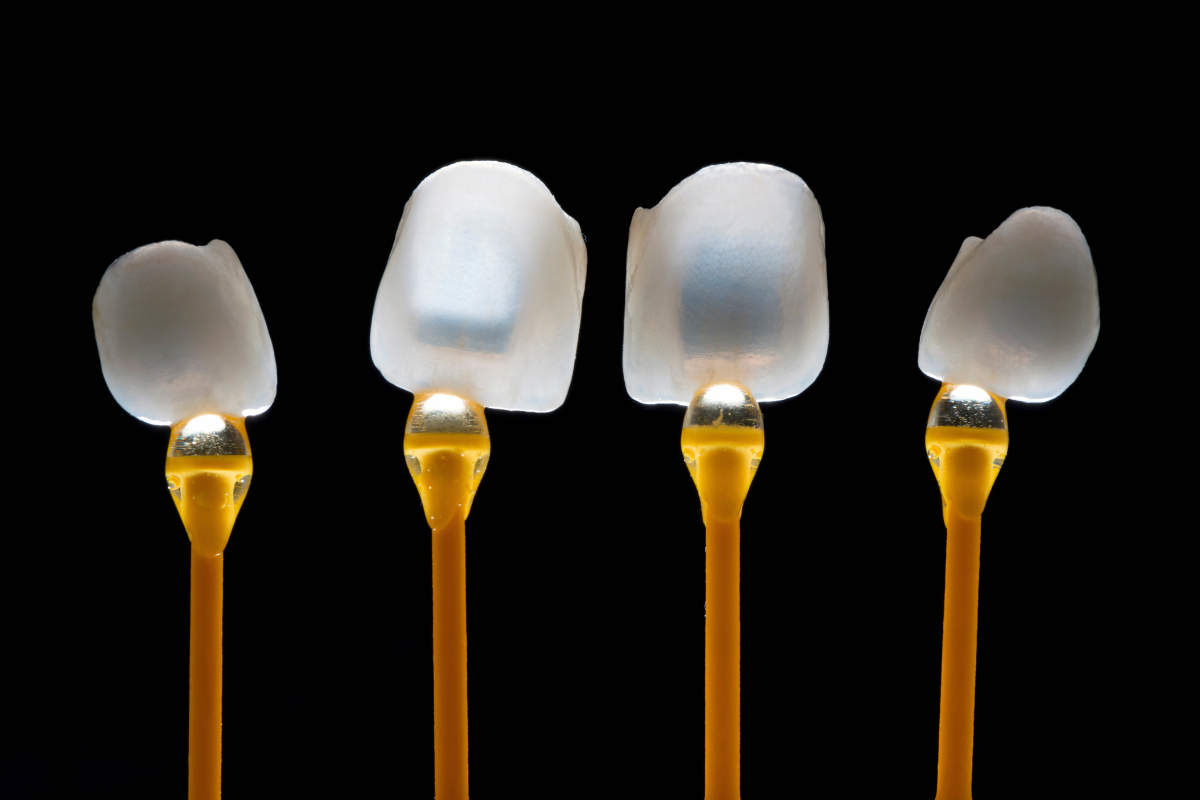
A veneer is a thin, custom-made covering bonded to the front surface of a tooth. It may be suitable for selected cosmetic concerns, including certain chips, discoloration, shape differences, or small gaps.
Veneers often involve removing some enamel, and the amount depends on the tooth and treatment plan. Because the procedure may be irreversible, it is important to understand what preparation is required before deciding.
Dental Bonding
Bonding uses tooth-colored composite resin to repair certain chips, reshape a tooth, or improve minor cosmetic imperfections. Depending on the situation, it may preserve more natural tooth structure than a veneer.
Bonding can be worth discussing when the area needing correction is small. However, composite resin may stain or chip over time and may require maintenance.
Dental Crown
A crown covers more of the tooth than a veneer and may be appropriate when a tooth needs substantial structural support as well as a cosmetic improvement. It is not automatically the best option for a tooth that only has a minor appearance concern.
The right choice depends on the tooth’s health, the amount of existing damage, and how much natural tooth structure remains.
Oxford Dental offers cosmetic and restorative dental services, including veneers and crowns. A dental examination can help determine which approach best fits your situation.
What If the Tooth Is Too Dark for a Veneer to Match?
A very dark tooth can be more challenging to match than a tooth with mild discoloration. The cause matters. Staining may be related to previous dental treatment, trauma, changes within the tooth, or other factors that require evaluation.
Your dentist will need to understand why the tooth is discolored before recommending a cosmetic solution. Depending on the cause, possible options may include internal whitening for an appropriate tooth, a veneer, a crown, or another treatment.
A veneer may be able to mask some discoloration, but the result depends on the severity of the color difference and the material and design selected. Making a veneer more opaque to conceal a dark tooth can also affect how naturally it reflects light.
It is best to discuss realistic expectations before treatment begins. Your dentist can explain what is achievable and whether an alternative may provide a more predictable result.
What Happens During the Single-Veneer Process?
The process varies according to your needs and the type of veneer selected, but it generally involves several stages.
- Consultation and examination
Your dentist reviews your concerns, examines the tooth and surrounding teeth, and checks your gums, bite, and overall oral health. The goal is to confirm whether a veneer is suitable. - Shade and appearance planning
The dentist assesses the color, shape, proportions, and visible characteristics of your natural teeth. You can discuss the result you want and any concerns about matching the neighboring teeth. - Tooth preparation and impressions
If a veneer is appropriate, the tooth may need some preparation. Digital scans or other impressions can be used to help create a restoration that fits the tooth. The specific process depends on the treatment plan. - Fabrication and fit assessment
The veneer is made to the planned specifications. Before it is bonded, your dentist evaluates factors such as fit, shade, shape, and how it relates to the surrounding teeth. - Placement and follow-up
Once the veneer is approved, it is bonded according to the treatment plan. Your dentist checks your bite and explains how to care for it and when to return for routine dental visits.
Oxford Dental’s published information on veneer design describes how shade, shape, translucency, and texture contribute to a natural-looking restoration.
Can a Single Veneer Look Different Over Time?
It can. Even when the initial match is very good, the natural teeth around a veneer may change over time.
Natural enamel can gradually darken or become stained. A veneer, particularly a porcelain veneer, generally will not change color in the same way. As a result, a veneer that once blended well may become more noticeable if the surrounding teeth change shade.
Other factors can affect the appearance or condition of a veneer, including chipping, wear, gum recession, or changes in the surrounding teeth. This does not mean a mismatch will definitely occur, but it is worth understanding before treatment.
To help maintain your veneer:
- Brush twice daily with a fluoride toothpaste and a soft-bristled toothbrush.
- Clean between your teeth every day.
- Keep up with regular dental examinations and professional cleanings.
- Avoid biting hard objects, such as ice or pens.
- Tell your dentist if you clench or grind your teeth; a protective nightguard may be recommended when appropriate.
- Contact your dentist if the veneer feels loose, chips, or changes how your teeth fit together.
Good care can help protect your veneer, but no restoration lasts forever. Your dentist can check its condition during routine visits and advise you if repair or replacement becomes necessary.
Is Getting One Veneer Right for You?
A single veneer may be a reasonable option if one tooth is affecting your confidence while the rest of your smile looks the way you want it to. You may not need a complete smile makeover to address a single chipped, uneven, or discolored tooth.
However, the best choice depends on more than appearance alone. Your dentist should assess the tooth’s health, available enamel, bite, and the likely ability to match the surrounding teeth. In some cases, bonding or another treatment may be a more conservative solution.
If you are considering veneers in Oxford, start by identifying what you want to improve and discussing your expectations with a dental professional. The aim is to find a treatment that fits your oral health needs and creates a balanced, natural-looking smile.
Frequently Asked Questions
Can you get a veneer on just one front tooth?
Yes. A single veneer may be used to improve the appearance of one front tooth with a suitable cosmetic concern, such as a chip, discoloration, or an irregular shape. Your dentist will evaluate whether the tooth is healthy enough for this treatment.
Will one veneer look different from my natural teeth?
It may if the color, translucency, texture, or shape does not blend well with the surrounding teeth. Careful shade selection, custom design, and fit assessment can help create a more natural appearance, although an exact match cannot be guaranteed.
Should I whiten my teeth before getting one veneer?
If you plan to whiten your natural teeth, discuss the timing with your dentist before the veneer shade is chosen. Whitening natural enamel first may help the dentist select a veneer shade that suits your intended tooth color.
Is bonding better than a single veneer?
It depends on the size and type of correction needed. Bonding may be appropriate for a small chip or minor shape adjustment, while a veneer may be considered for other cosmetic concerns. Your dentist can compare the benefits and limitations of both options for your tooth.
Can I replace a single veneer if it no longer matches?
In some cases, a veneer can be replaced if its appearance or condition becomes unsatisfactory. Before replacement, your dentist should assess the veneer, the underlying tooth, and the surrounding teeth to determine the reason for the mismatch and the most appropriate next step.
Explore Your Veneer Options at Oxford Dental
You don’t necessarily need to change every tooth to feel better about your smile. If one tooth looks different, a personalized evaluation can help you understand whether a single veneer, bonding, or another treatment is the right approach.
At Oxford Dental, we provide cosmetic and restorative dental services for patients in Oxford, MS. Our team can evaluate your tooth, discuss your smile goals, and explain the available options so you can make an informed decision.
Ready to explore your options? Contact Oxford Dental to schedule a consultation and discuss whether a single veneer could help your smile look more balanced and natural.
Recent Posts
See All